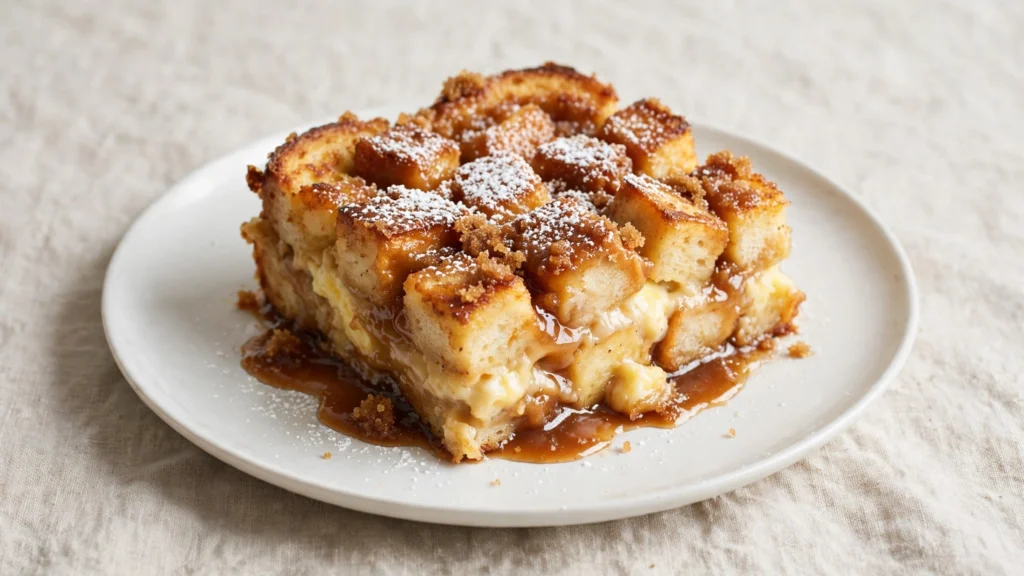
This baked French toast casserole turns the classic breakfast into an easy, make-ahead dish that feeds a crowd without any stovetop flipping. Cubed brioche or challah is layered over a buttery brown sugar base, soaked in a rich cinnamon-vanilla custard, and baked until the top is golden and slightly crisp while the inside stays soft and custardy. The result is a dessert-like breakfast that tastes like sticky, toffee-glazed bread pudding, with just enough structure to hold together on a fork.
What's Actually Happening in This Recipe
There are two layers doing two different jobs. The bottom layer — melted butter and brown sugar poured into the pan before the bread goes in — browns and becomes sticky and toffee-like as it bakes, forming a coating on the underside of the casserole instead of a plain, dry bottom. The top layer is the bread itself, soaked in a custard of eggs, milk, vanilla, and cinnamon. As it bakes, the custard sets around the bread cubes the way it would in a bread pudding, while the very top, which gets less coverage from the liquid, dries out slightly and turns golden and a little crisp. That contrast — soft, custardy interior against a sticky, toffee-like bottom and a lightly crisp top — is what makes this dish different from simply baking egg-soaked bread.
Why the Ingredient Ratios Matter
The custard-to-bread ratio here (400g eggs plus 600ml milk for a 450g loaf) is deliberately generous — enough liquid that every cube of bread gets fully saturated, since dry pockets of bread won't soften properly during baking. The brown sugar base itself uses 57g (4 tablespoons) of butter to 100g (½ cup) of brown sugar — roughly a 1:1.75 ratio by weight — which is enough sugar to combine with the melted butter into a smooth, syrupy mixture rather than a grainy one. (The remaining 28g butter and 50g brown sugar are added on top of the soaked bread before baking, not part of the base layer itself.)
Best Bread to Use
Brioche or challah gives the richest flavor because of their higher egg and butter content, and holds up better structurally than plain white bread. Day-old bread works better than fresh, since slightly dried bread absorbs the custard instead of turning mushy. If your loaf is fresh, cube it and leave it uncovered at room temperature for a few hours, or dry it in a low oven for about 10 minutes before using.
Make-Ahead and Occasions
This casserole is well suited to holiday mornings or brunches, since the entire dish can be assembled the night before, refrigerated, and baked fresh in the morning. That makes it a practical option when you want a hot, homemade breakfast without early-morning prep.
Serving Suggestions
Serve warm, straight from the dish, with maple syrup and a dusting of powdered sugar. Fresh berries or a dollop of whipped cream round it out nicely for a brunch spread, and it pairs well with crisp bacon or breakfast sausage on the side for a heartier meal.