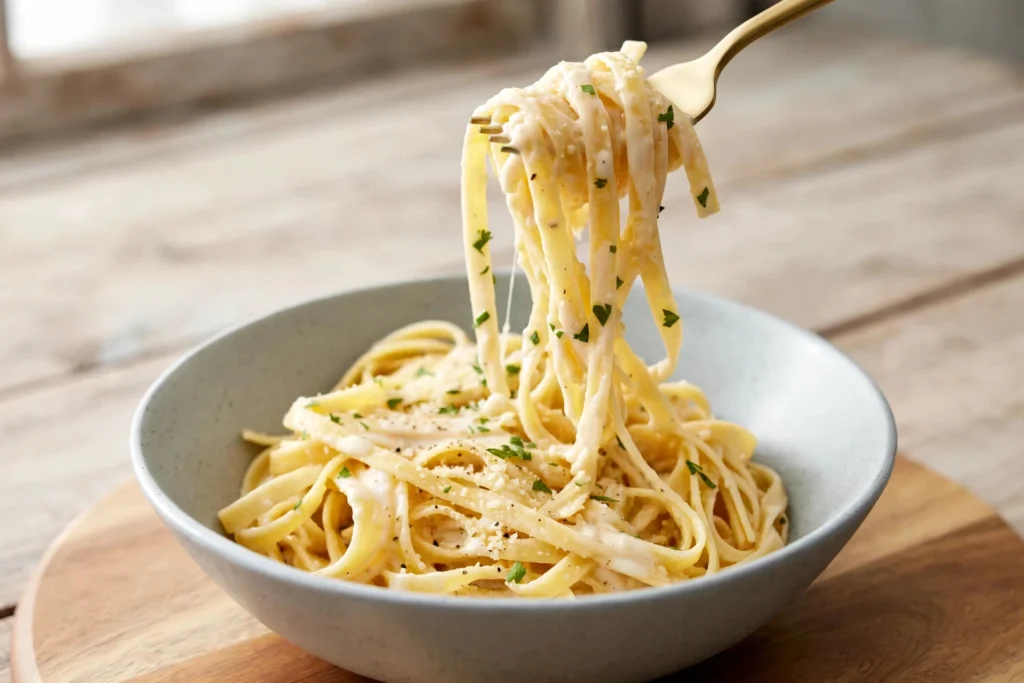
There's a reason Fettuccine Alfredo has stuck around for so long — it's just a handful of ingredients, and yet somehow that's enough to feel like a treat. This is the rich, cream-based version most people know from Italian-American kitchens; the original Roman dish, created by Alfredo di Lelio in the early 1900s, was simpler — just fresh pasta, butter, and Parmigiano-Reggiano, without cream or garlic. This version leans into that American-style richness on purpose, with cream and a second cheese for extra body.
The sauce is what makes it: silky, pale gold, clinging to every ribbon of fettuccine instead of pooling at the bottom of the bowl. It tastes rich and nutty with just enough sharpness to keep it from feeling flat — tender pasta wrapped in a sauce thick enough to coat a spoon but still loose enough to fall in ribbons.
It's a beginner-friendly recipe — the technique is straightforward — but it rewards patience with heat. Rush it and the sauce can turn grainy or split; keep things gentle and it comes together smoothly. Start to finish, it's about half an hour, making it a solid weeknight choice that still feels special for company.
Why This Recipe Works
- Warming the butter and cream together first creates a smooth, gently hot base for the cheese to melt into — the cheese and dairy build most of the sauce's body, with a little starchy pasta water at the end fine-tuning the texture.
- Freshly grated Parmigiano-Reggiano and Pecorino Romano (not pre-shredded) melt more smoothly — bagged shredded cheeses often have anti-caking agents that can affect melting. Parmigiano-Reggiano gives the sauce its nutty backbone, Pecorino Romano a sharper edge; swap the 50g Pecorino for 50g more Parmigiano-Reggiano for an all-Parmesan, milder sauce.
Serving It Up
Alfredo is best eaten the moment it's tossed, while the sauce is still loose and glossy — it firms up fast as it sits. A simple salad or garlic bread is all it needs, though it takes well to grilled chicken, shrimp, or broccoli for a bigger meal.
Why the Sauce Might Look Thin in the Pan
Don't worry if it looks loose right after tossing — it thickens for a minute or two off the heat. If it's too thick, a spoonful more pasta water loosens it back up (a heavily reduced sauce may need more water and patience).