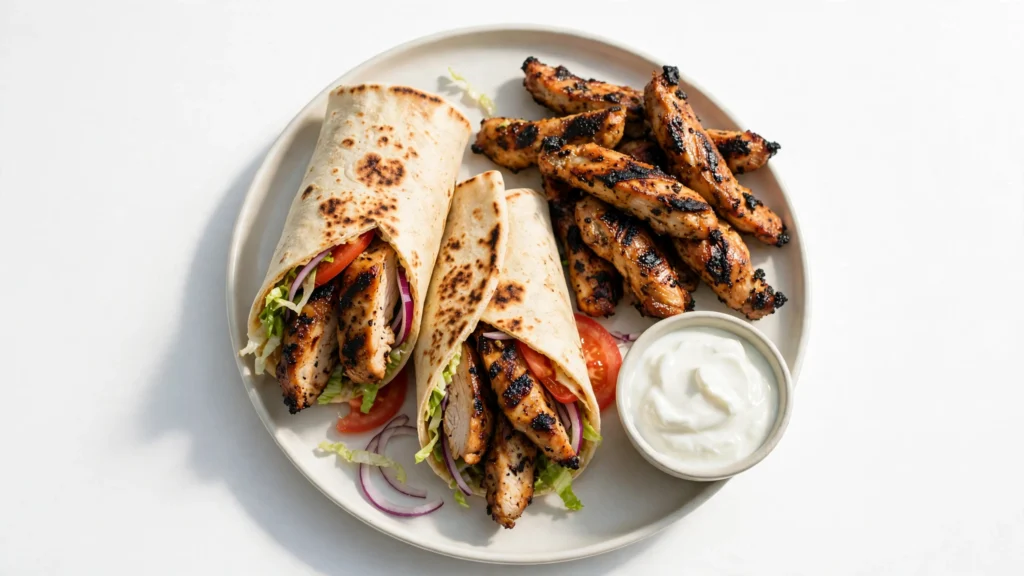
Chicken shawarma is a spiced, seared chicken dish rooted in Middle Eastern street food traditions, where meat is traditionally stacked on a vertical rotisserie and shaved off in thin, crisp-edged slices as it turns. This home version recreates that same warm, earthy spice blend and charred, juicy texture in a skillet or on a grill — no rotisserie or special equipment needed. The result is chicken that's deeply savory with a light smokiness from the paprika, a citrusy background note from the cardamom, and just enough heat from the cayenne to keep things interesting without overwhelming the dish.
What Each Ingredient Is Doing
The marinade works on several levels at once. Garlic adds a sharp, savory backbone that mellows as it cooks, while lemon juice adds acidity and brightness. Salt seasons the chicken and can gradually move deeper into the meat through diffusion. Olive oil coats the meat, slows moisture loss during cooking, and helps the ground spices bloom into a fragrant crust as they hit the hot pan. Coriander, cumin, and smoked paprika form the savory backbone of the spice blend, cayenne adds a controllable layer of heat without overpowering the other flavors, and cardamom adds a slightly piney, citrusy note that's common in many shawarma spice blends, though exact blends vary by region and cook — some lean more on cinnamon or allspice instead.
How the Recipe Comes Together
The process breaks into four stages: marinating, searing, resting, and assembling. Marinating is hands-off — once the chicken is coated and in the fridge, there's nothing to do until cook time. Searing is the most active stage and the fastest — about 10–15 minutes per batch — building a browned, spiced crust while keeping the inside juicy, with a food thermometer confirming doneness rather than guesswork. Resting settles the meat for a few minutes before slicing, helping it hold onto more juice. The final stage is assembly rather than cooking — everything goes on a platter so people can build their own wraps.
Texture and Result
Because thighs hold more fat than breast meat, they stay noticeably juicier through a hot, fast sear and develop better browning on the surface — the small charred spots are where a lot of the flavor concentrates. Expect tender, moist chicken with a slightly crisp, spiced exterior, closer in texture to grilled meat than to a stew or braise.
Getting the Timing Right
Marinating for at least 3 hours gives the chicken good surface flavor and seasoning; 12–24 hours gives a more pronounced result. The spices and oil mostly flavor the outer layer of the meat rather than the center — salt is the main marinade component that can move deeper into the meat through diffusion, which is part of why searing the marinated surface matters so much for flavor.
How to Serve It
A common way to serve shawarma is wrapped: warm flatbread spread with the yogurt sauce, topped with the sliced chicken, lettuce, tomato, and red onion, then rolled up by hand. It works just as well plated open-faced with rice or a chopped salad on the side for a lower-effort, fork-and-knife version, which also makes it practical for serving a group where people can build their own plate.