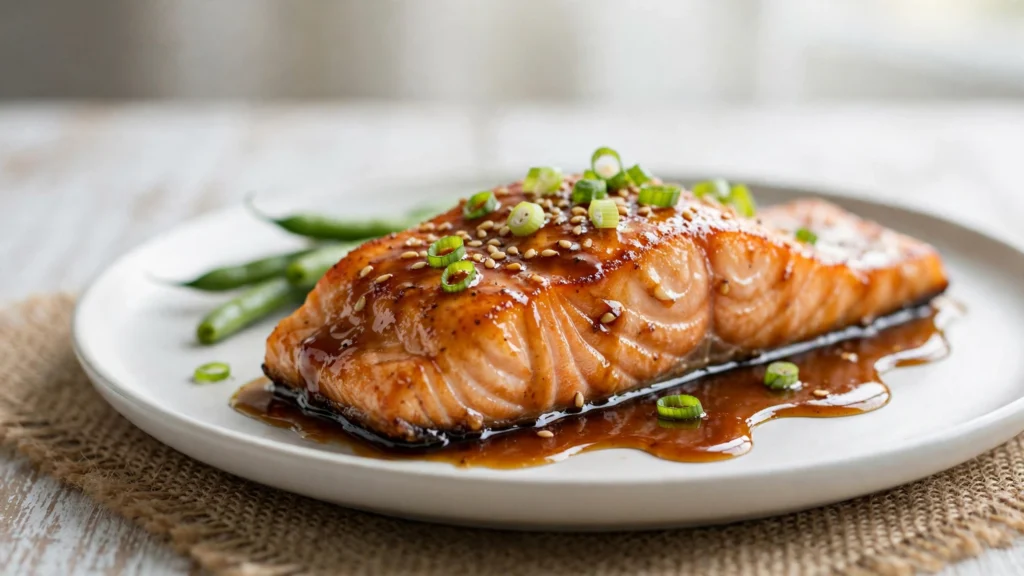
This Honey Garlic Salmon takes four common pantry ingredients — honey, soy sauce, vinegar, and garlic — and turns them into a thick, glossy glaze that clings to a pan-seared salmon fillet. It comes together in one skillet in about 20 minutes, making it a practical option for a weeknight dinner that still feels a little special.
How the Sauce Works
The sauce is built directly in the same pan the salmon was cooked in, so it picks up the browned bits (the "fond") left behind by searing. That fond is where a lot of the savory flavor comes from — without it, the sauce tastes flatter and one-dimensional. Because the mixture is mostly liquid (honey, soy sauce, and vinegar), what happens in the pan over those 2–3 minutes is mainly reduction — the water content boiling off so the sugars and salt concentrate into a thicker, glossier glaze — rather than true dry-heat caramelization. The soy sauce adds saltiness and depth, the vinegar cuts through the sweetness so it doesn't taste like dessert, and the raw garlic gets just enough time in the hot sauce to soften and turn fragrant instead of sharp.
What the Salmon Should Look and Feel Like
Salmon is forgiving to cook, and searing it first — undisturbed for several minutes per side — is what builds the golden crust that later catches and holds the glaze. If the fillet is moved around too early or too often, that crust won't form properly and the sauce has less to grip onto. Cook the salmon to an internal temperature of 63°C / 145°F, measured at the thickest part. At that point the flesh is opaque and flakes cleanly with a fork all the way through — color and flaking are useful confirmation, but a thermometer provides the most reliable way to verify the safe internal temperature, since fillets vary in thickness and cooking time alone isn't a guarantee.
Choosing and Prepping the Salmon
Skin-on fillets hold together better during searing and give you the option of crisp skin if you sear that side first. Patting the fish completely dry before it goes into the pan matters more than it sounds — any surface moisture creates steam instead of a sear, and the fillet will stew rather than brown.
Serving It
Spoon the extra sauce from the pan over the fillets right before serving, since it thickens as it cools. Steamed rice or noodles are good choices underneath, as they soak up the glaze; simple steamed or roasted vegetables like broccoli or green beans round out the plate without competing with the sauce's flavor.