
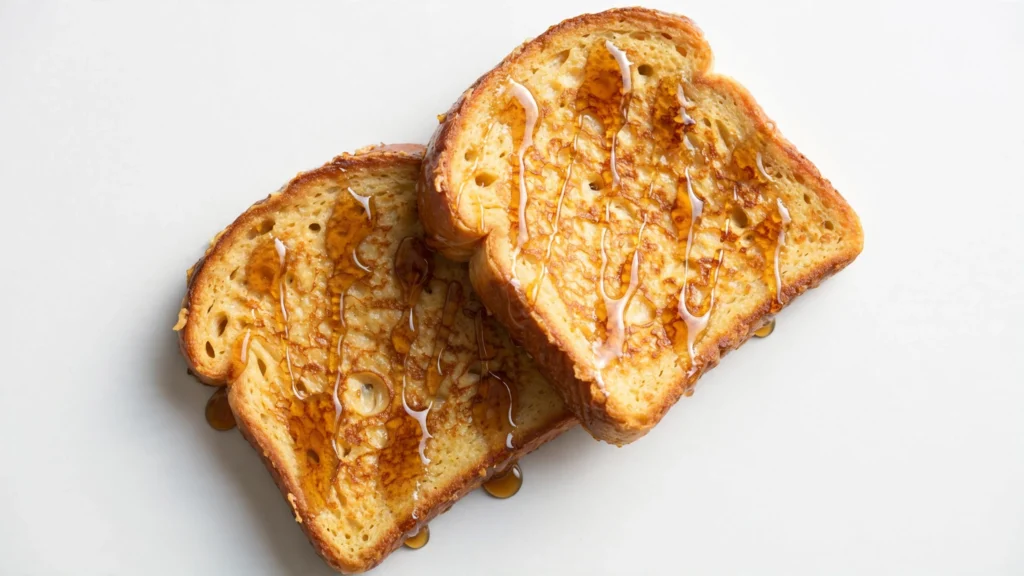

I made French toast for my kids on a rushed Tuesday morning and completely underestimated the batter — it came out thin and watery, so the bread just got soggy instead of soaking up that eggy custard properly. Lesson learned. Now I always add a bit of flour to the batter, which is honestly the trick nobody tells you about. The result is a batter that clings to the bread instead of sliding off, so you get crispy edges on the outside and a soft, custardy center on the inside. My kitchen smells like warm cinnamon and vanilla the whole time it’s cooking, and my kids come running before I’ve even finished plating it.
This is the French toast I make almost every weekend now. It works with regular sandwich bread in a pinch, but thick slices like brioche or Texas toast really take it up a notch. Whether you’re in the US measuring in cups or in the UK/Canada working in grams, I’ve written this so anyone can follow along without doing math in their head.
Classic French Toast (Thick, Fluffy & Cinnamon-Sweet)
Description
This classic French toast recipe uses a simple trick — a touch of flour in the egg batter — to make a thicker custard that coats the bread evenly instead of just sitting on top. That means no soggy centers and no dry patches, just golden, slightly crisp edges with a tender inside. It comes together in about 15 minutes with basic pantry ingredients, making it perfect for busy school mornings or a slow Sunday brunch with coffee and fresh berries.
Ingredients
Instructions
-
Preheat your griddle to 175°C (350°F), or set a skillet over medium heat on the stove.
-
Melt the butter (in the microwave or a small pan) and let it cool slightly. In a blender, add the eggs, milk, flour, sugar, salt, cinnamon, vanilla, and 1 tablespoon of the melted butter — save the rest for greasing the pan later. Blend until smooth. If mixing by hand, whisk the flour and eggs together first, then stir in the rest so you don't end up with lumps. Blending a tablespoon of butter into the batter gives the bread a richer flavor and a better golden texture once it hits the pan.
-
Dip each bread slice into the batter, turning to coat both sides well. Don't rush this step or let the bread sit too long in the batter — it'll turn mushy and fall apart in the pan. I learned this the hard way after leaving a slice in too long and watching it basically dissolve.
-
Lightly grease the griddle or pan with the remaining 1 tablespoon of melted butter, then place the soaked bread slices on it. Cook for 2–3 minutes per side, until golden brown. Don't walk away here — the sugar in the batter means it can go from golden to burnt fast if the heat's too high.
-
Move the cooked slices to a plate and serve warm with syrup, a dusting of powdered sugar, and fresh berries if you have them.
Nutrition Facts
Servings 8
- Amount Per Serving
- Calories 167kcal
- % Daily Value *
- Total Fat 4g7%
- Saturated Fat 1g5%
- Cholesterol 95mg32%
- Sodium 121mg6%
- Potassium 73mg3%
- Total Carbohydrate 26g9%
- Dietary Fiber 0.3g2%
- Sugars 7g
- Protein 7g15%
- Calcium 44 mg
- Iron 1 mg
- Vitamin E 8 IU
* Percent Daily Values are based on a 2,000 calorie diet. Your daily value may be higher or lower depending on your calorie needs.
Note
You can swap the bread for whatever you've got — cinnamon bread, sourdough, or even regular sandwich bread if that's all that's in the pantry (just note that thinner or lighter slices will lower the calorie count slightly from what's listed here). The batter also freezes well if you want to make a double batch ahead of time. For reheating leftovers, I've found the air fryer at 175°C (350°F) for about 3–4 minutes gives you crispy edges again, while the microwave just makes it soft and a bit rubbery — fine in a pinch, but not the same.