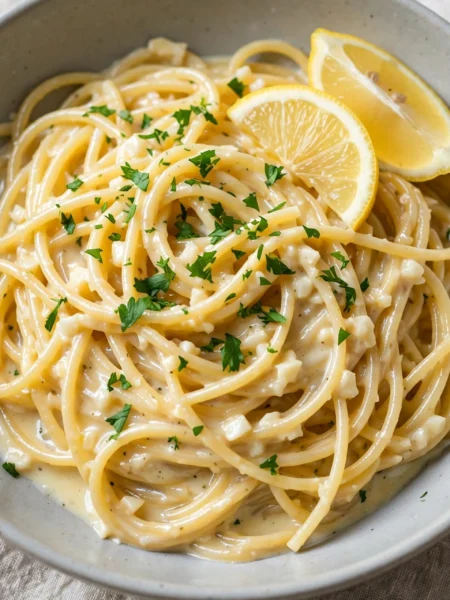


There’s a reason Fettuccine Alfredo has stuck around for so long — it’s just a handful of ingredients, and yet somehow that’s enough to feel like a treat. This is the rich, cream-based version most people know from Italian-American kitchens; the original Roman dish, created by Alfredo di Lelio in the early 1900s, was simpler — just fresh pasta, butter, and Parmigiano-Reggiano, without cream or garlic. This version leans into that American-style richness on purpose, with cream and a second cheese for extra body.
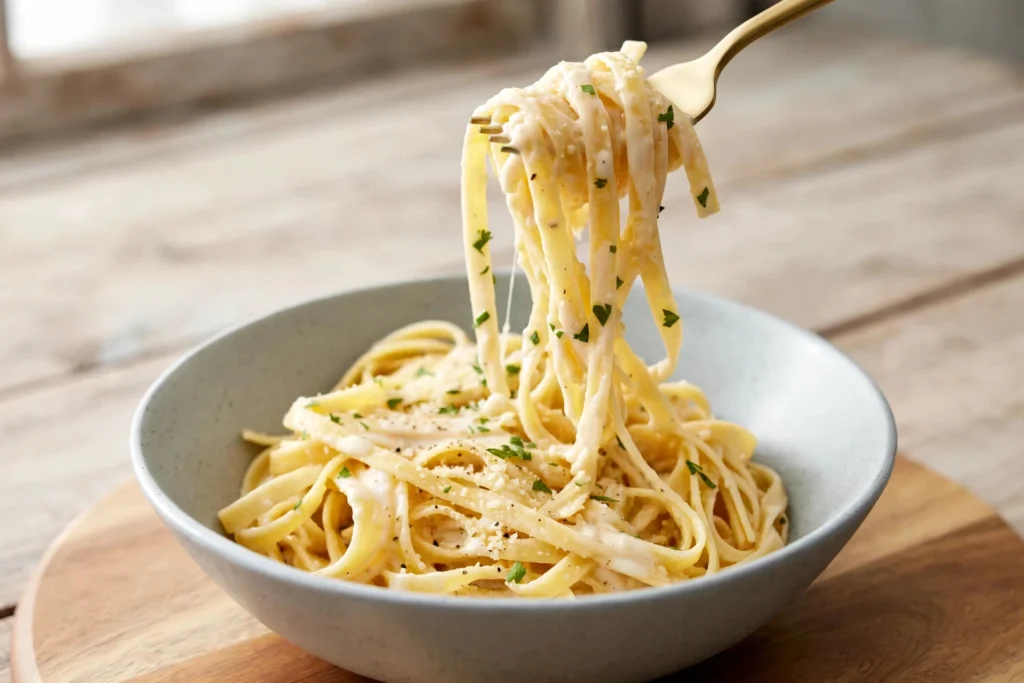
The sauce is what makes it: silky, pale gold, clinging to every ribbon of fettuccine instead of pooling at the bottom of the bowl. It tastes rich and nutty with just enough sharpness to keep it from feeling flat — tender pasta wrapped in a sauce thick enough to coat a spoon but still loose enough to fall in ribbons.
It’s a beginner-friendly recipe — the technique is straightforward — but it rewards patience with heat. Rush it and the sauce can turn grainy or split; keep things gentle and it comes together smoothly. Start to finish, it’s about half an hour, making it a solid weeknight choice that still feels special for company.
Why This Recipe Works
- Warming the butter and cream together first creates a smooth, gently hot base for the cheese to melt into — the cheese and dairy build most of the sauce’s body, with a little starchy pasta water at the end fine-tuning the texture.
- Freshly grated Parmigiano-Reggiano and Pecorino Romano (not pre-shredded) melt more smoothly — bagged shredded cheeses often have anti-caking agents that can affect melting. Parmigiano-Reggiano gives the sauce its nutty backbone, Pecorino Romano a sharper edge; swap the 50g Pecorino for 50g more Parmigiano-Reggiano for an all-Parmesan, milder sauce.
Serving It Up
Alfredo is best eaten the moment it’s tossed, while the sauce is still loose and glossy — it firms up fast as it sits. A simple salad or garlic bread is all it needs, though it takes well to grilled chicken, shrimp, or broccoli for a bigger meal.
Why the Sauce Might Look Thin in the Pan
Don’t worry if it looks loose right after tossing — it thickens for a minute or two off the heat. If it’s too thick, a spoonful more pasta water loosens it back up (a heavily reduced sauce may need more water and patience).
Creamy Parmesan Fettuccine Alfredo
Description
A rich, silky, cream-based Fettuccine Alfredo — Italian-American style — with butter, cream, and two Italian cheeses melted into a glossy sauce that clings to every strand of pasta. Ready in about 30 minutes, and simple enough for a beginner to pull off.
Ingredients
Instructions
-
Cook the pasta. Bring a big pot of well-salted water to a boil (100°C/212°F). Add the fettuccine and cook until it's tender but still has a bit of bite, about 9–10 minutes. Right before draining, scoop out and set aside about ½ cup of the pasta water — you'll need it later. Drain the pasta and set it aside.
-
Melt the butter. While the pasta cooks, put the butter in a large skillet over low heat and let it melt gently — it shouldn't sizzle or brown. Stir in the garlic and cook for about 30 seconds, just until you can smell it.
-
Warm the cream. Pour in the cream and stir to combine with the butter. Let it come to a gentle simmer — you're looking for small, lazy bubbles, not a rolling boil. Simmer for 3–4 minutes, stirring now and then, until it's steaming gently with small bubbles around the edges of the pan.
-
Melt in the cheese. Turn the heat down to low. Add the Parmigiano-Reggiano and Pecorino Romano a small handful at a time, whisking each addition in until it's fully melted before adding more. Once all the cheese is in and the sauce looks smooth and glossy, it's ready.
-
Toss with the pasta. Add the drained fettuccine straight into the sauce and toss for a minute or two until every strand is coated. If it looks tight or thick, splash in a couple tablespoons of the reserved pasta water and toss again — repeat until the sauce moves easily and looks glossy. Taste and season with salt and pepper.
-
Serve right away. Spoon into warm bowls, top with a little extra cheese and the parsley if you're using it, and get it to the table while the sauce is still loose — it firms up fast once it cools.
Nutrition Facts
Servings 6
- Amount Per Serving
- Calories 724kcal
- % Daily Value *
- Total Fat 44g68%
- Saturated Fat 26g130%
- Cholesterol 140mg47%
- Sodium 789mg33%
- Potassium 249mg8%
- Total Carbohydrate 62g21%
- Dietary Fiber 3g12%
- Sugars 3g
- Protein 21g42%
- Calcium 362 mg
- Iron 3 mg
* Percent Daily Values are based on a 2,000 calorie diet. Your daily value may be higher or lower depending on your calorie needs.
Note
Storage: Refrigerate leftovers within 2 hours of cooking (or within 1 hour if the room is above 90°F/32°C), in an airtight container, for up to 3 days. The sauce firms up a lot once chilled — that's normal, not a sign anything went wrong.
Freezing: Skip it if you can. Cream-and-cheese sauces tend to separate and go grainy after freezing and thawing.
Reheating: Warm it gently in a skillet over low heat with a splash of milk or leftover pasta water, stirring often, until heated through and the sauce reaches 165°F/74°C — that's the food-safety target, not something to aim past for texture's sake. A hot microwave zap can make it split, so keep the heat low and go slow — just make sure it hits that temperature before serving, not merely warm.
Pro Tips:
- Grate your own cheese where you can. Many bagged pre-shredded cheeses contain anti-caking agents that keep them from melting as smoothly.
- Keep the heat low once the cheese is in the pan — this is the single biggest thing that separates a silky sauce from a broken one.
- Warm your bowls before serving so the sauce doesn't seize up the second it hits a cold surface.
Common Mistakes:
- Letting the cream come to a full boil, which increases the risk of the sauce separating.
- Adding cold cheese straight from the fridge, which cools the sauce too fast and can make it clump instead of melt smoothly.