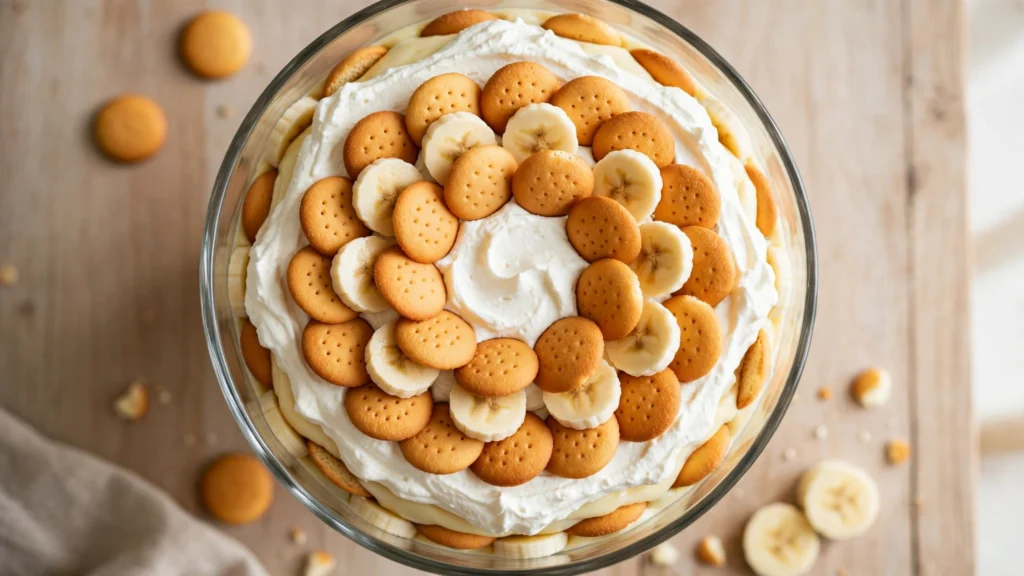
This Southern-style banana pudding is a layered, no-bake dessert built from thick vanilla pudding, ripe banana slices, and crisp vanilla wafers that soften into a soft, cake-like texture as everything chills together. It's one of those desserts that looks far more impressive than it actually is to make — there's no oven involved, no complicated technique, and most of the "work" happens in the refrigerator rather than in your hands.
What Makes the Pudding So Thick
The pudding base uses less milk than the instant pudding box normally calls for. On its own, that would make the pudding too thick to eat with a spoon — but that's exactly the point here. Sweetened condensed milk is whisked in afterward to soften the very thick pudding base back down to something spoonable, while also adding sweetness, milk solids, and extra richness (it's a concentrated, sugar-heavy ingredient, not a plain thin liquid, so it adds body as much as it thins things out). Whipped cream is then folded in at the end to lighten the mixture further. The result is a pudding that's thick enough to hold its shape when layered but still soft and airy once you take a bite — not a dense, gluey block, and not a runny pudding either.
Flavor and Texture
Every layer contributes something different: the pudding is smooth and lightly sweet with a strong vanilla background, the bananas add natural sweetness and a slightly firm bite, and the wafers — once softened by a few hours in the fridge — take on a texture closer to cake or soft cookie than a crunchy biscuit. The whipped cream topping stays a little lighter and less sweet than the pudding underneath, so the dessert doesn't feel one-note.
Why It's Beginner-Friendly
There's nothing technical here beyond whisking a pudding mixture and whipping cream to stiff peaks, both of which are explained step-by-step below with visual cues so you know exactly what "done" looks like. Because everything is assembled cold and finished in the fridge, there's no risk of overcooking or undercooking anything — the biggest factor in how it turns out is simply giving it enough time to chill.
Make-Ahead and Serving
This dessert needs a minimum chilling time for the wafers to soften properly, which makes it a genuinely useful make-ahead option — you can build it the night before and it will actually taste better for having sat longer. It's traditionally scooped straight from a large trifle bowl or casserole dish with a big spoon, so each serving naturally includes all the layers. It's a common choice for potlucks, barbecues, and family dinners, partly because it travels well chilled and doesn't need reheating or last-minute attention.
What to Watch For
Banana slices exposed to air will start to brown within an hour or two, so the timing of when you slice them and how well you cover them with pudding both affect how the finished dessert looks (browning mainly affects appearance).